Canon LUMI
Immersive Learning for Young
Explorers Through Play
This innovative system combines interactive projections, motion detection, and diverse educational themes to create immersive learning experiences for K-5 children.
- Product Design
- Ed-tech
- 0-1 Project
- Duration: 4 Months
- Role
- Product Designer
- Client
- Canon
- Team
- 1 Product Designer
- 1 Product Manager
- 2 UX Researcher
- 2 Technical Experts
- Challenge
- The current EdTech landscape lacks holistic solutions that integrate Social and Emotional Learning (SEL) with traditional academics, often failing to engage children or address parental concerns about screen time and progress tracking. Additionally, many high-quality EdTech products are expensive, making them inaccessible to many families.
- Solution
- Canon LUMI delivers an immersive, motion-based learning system combining SEL and academics, with progress tracking and affordable pricing for families.
The Goals
Canon's Strategic Goals
Younger Generation
Integrate in young lives earlier to build a relation with the brand.
Brand Rejuvenation
Create varied price points and fresh brand image.
New Tech Application
Diversify the core competencies with bringing new technology
Canon aims to enter the EdTech sector, focusing on developing innovative products and solutions to ease the educational challenges parents of K-5 students face.
Market Segment
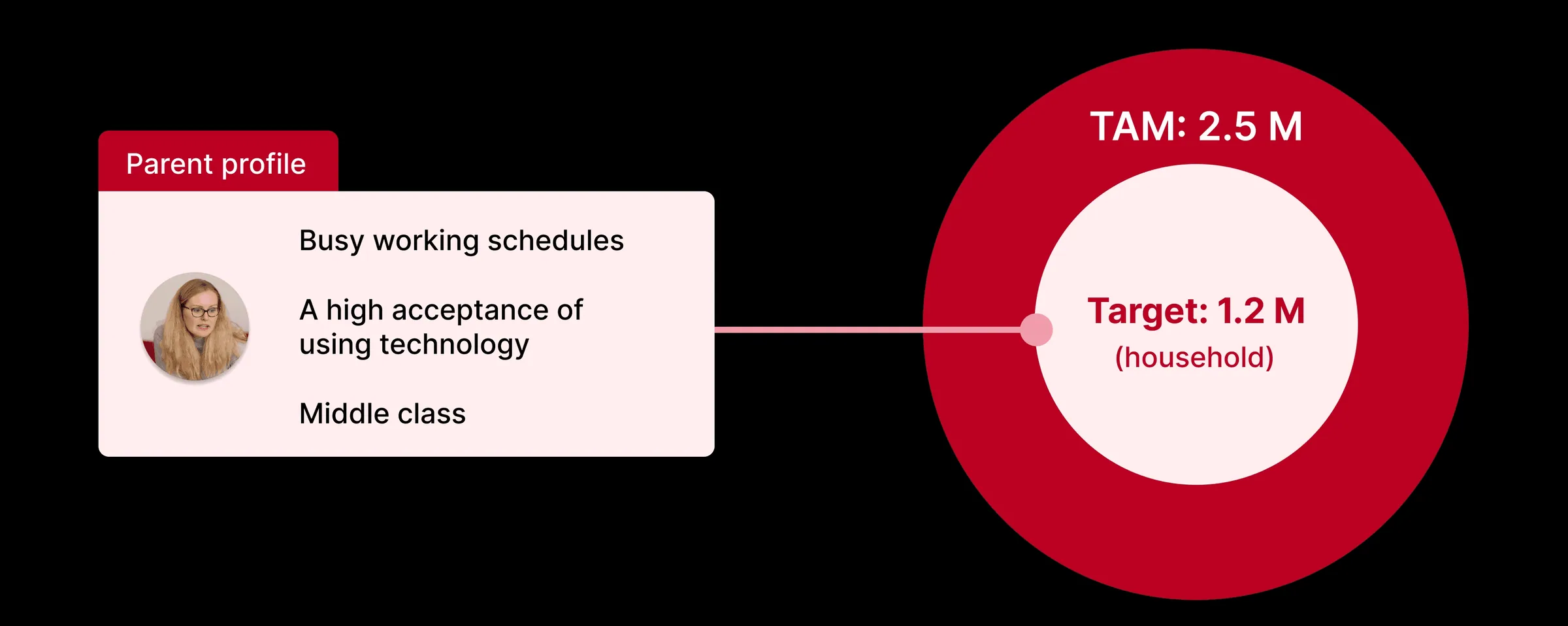
The Total Addressable Market (TAM) for our K-5 home-based SEL-integrated EdTech solution is estimated at 2.5M households in the US.
This estimate is grounded in the assumption that a typical family might have more than one child within the K-5 age range, and that our solution would likely be purchased once per household.
The Journey
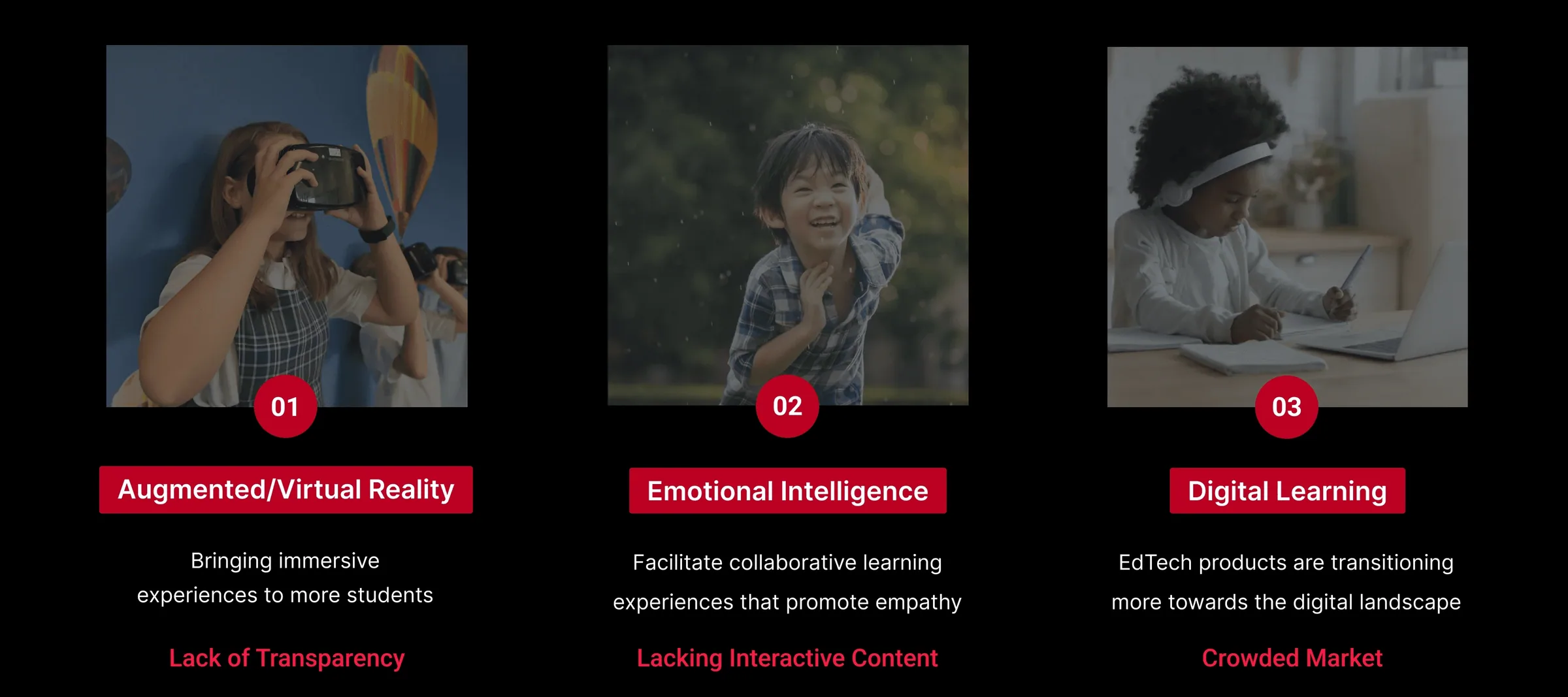
Key EdTech Trends
Research shows that SEL consistently positively affects students’ success from their academic performance and behavior to their ability to manage stress.
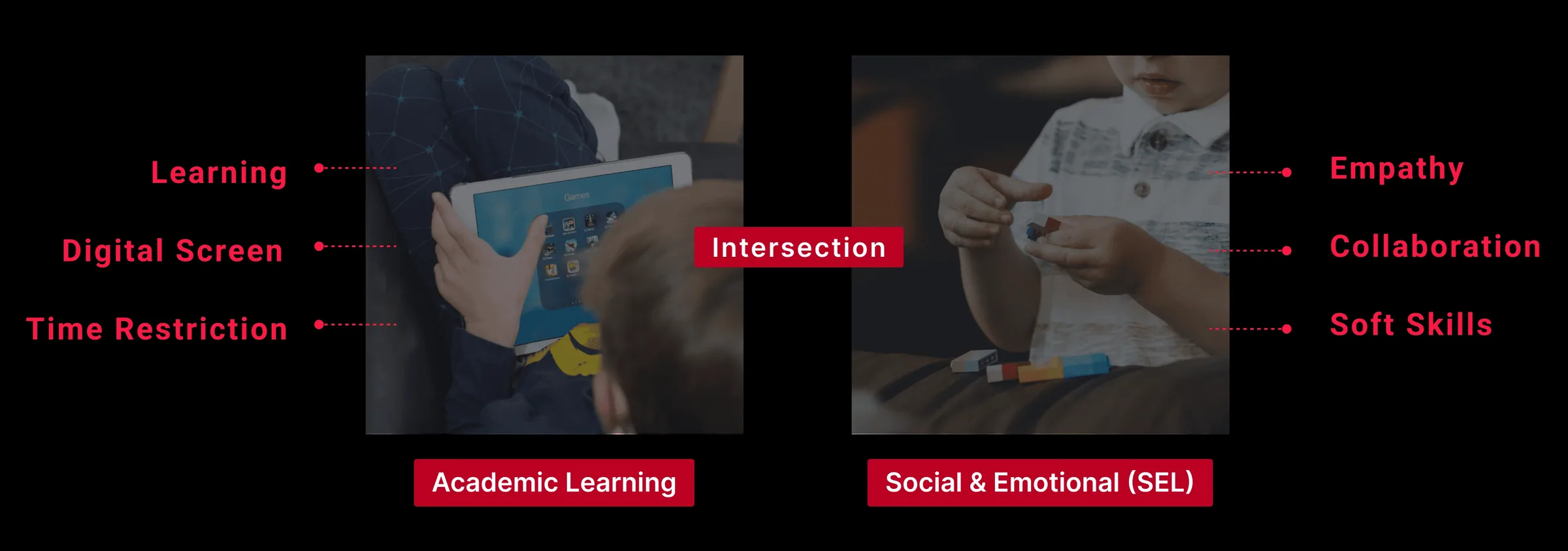
Lifelong Success starts with social-emotional learning
The opportunity is to transform how children interact with educational content, ensuring that learning is not only effective but also delightful and emotionally enriching.
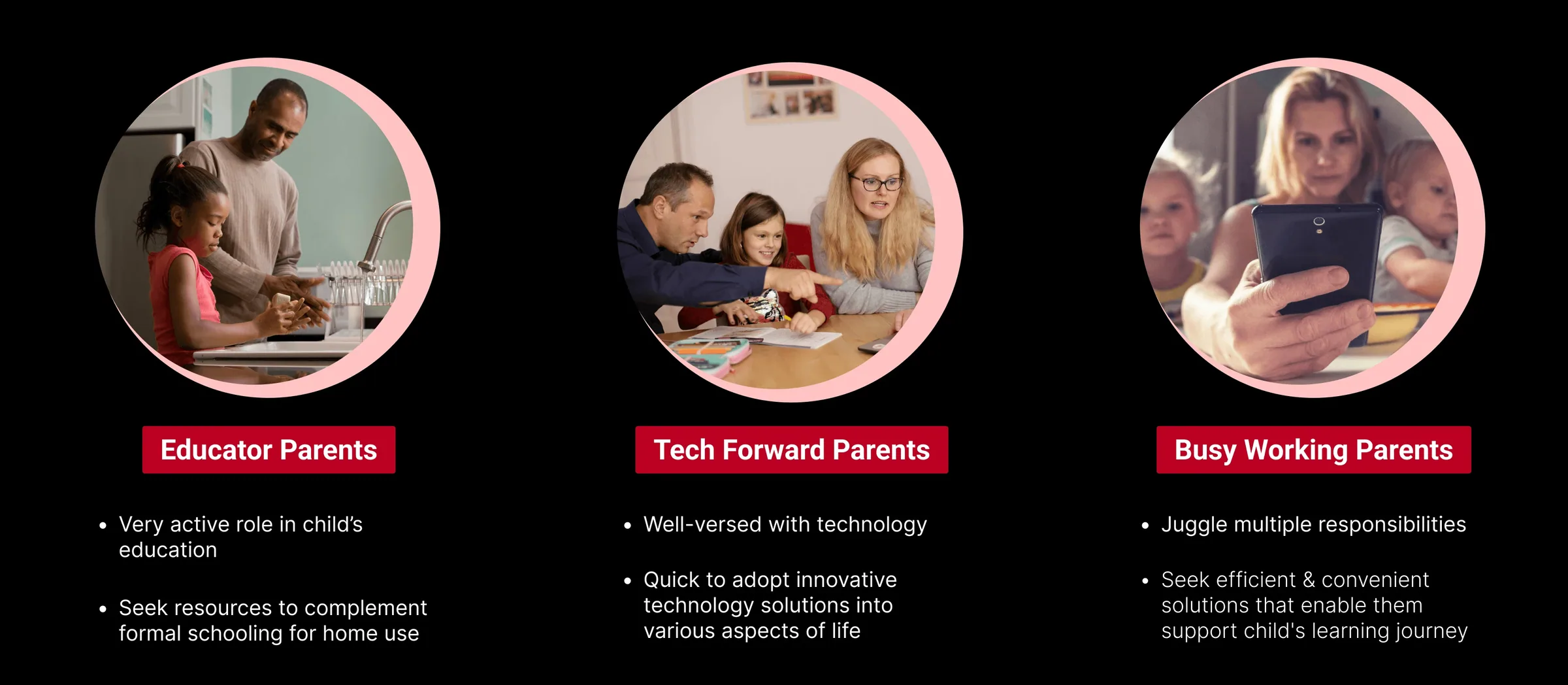
Parent Groups
To gain a comprehensive understanding of K-5 parents, our primary buyers, we structured our research to examine their perceptions with their children's integration of SEL in EdTech.
Few Key Insights That Informed My Design Decisions
01
Parents have expressed growing concerns about children’s screen time and the appropriateness of the content accessed.
02
Parents demonstrate a strong reliance on storytelling as a tool for facilitating social and emotional learning in their children.
03
Parents understand the lack of a structured framework and the abundance of scientific terminology.
04
Despite practicing emotion labeling at home and in school, children face challenges expressing emotions.
How might we
assist parents in supporting their kids’ (K-5) navigating social and emotional development and learning.
Solution
Introducing Canon Lumi
Where play meets potential
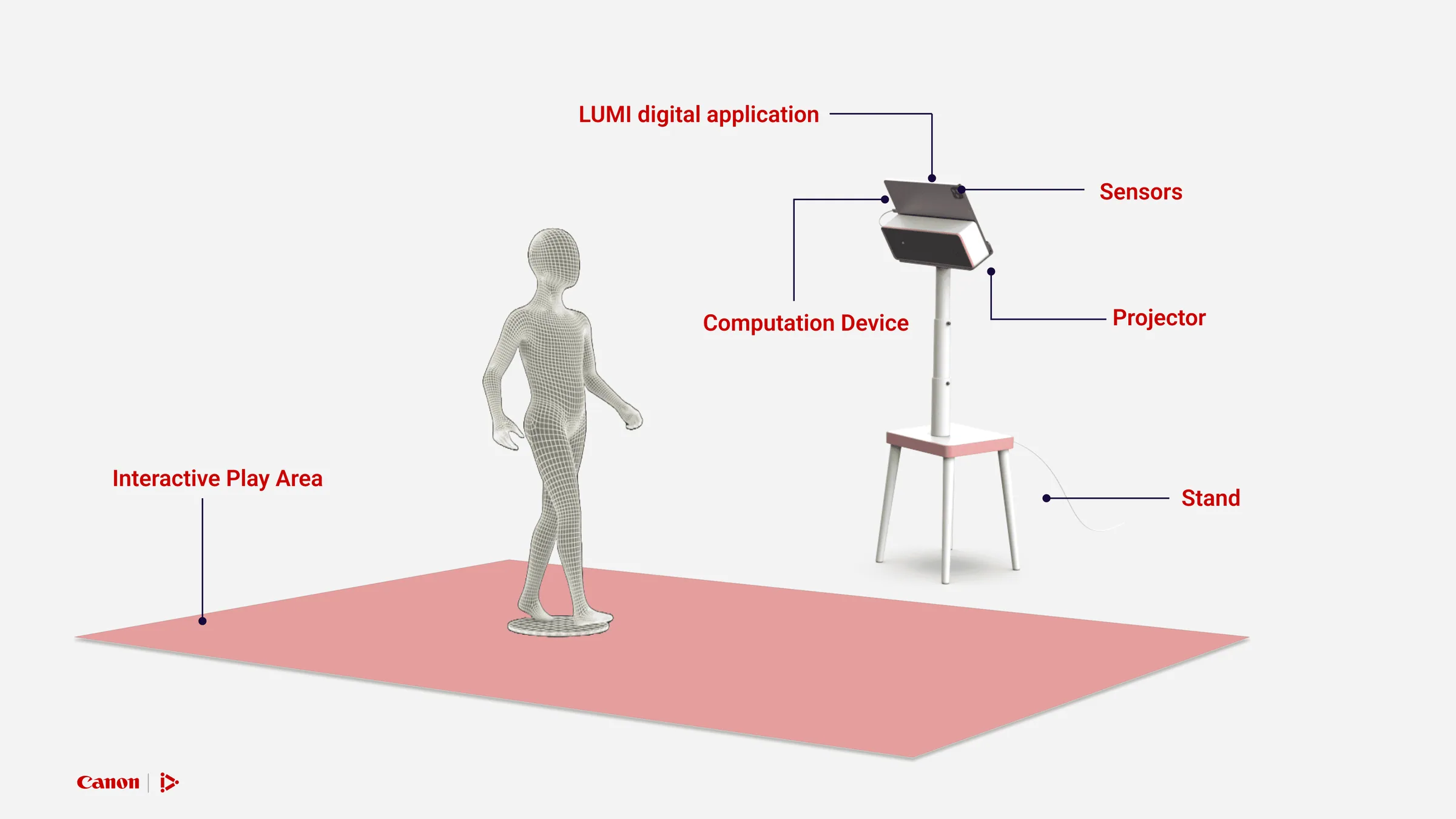
How LUMI Works?
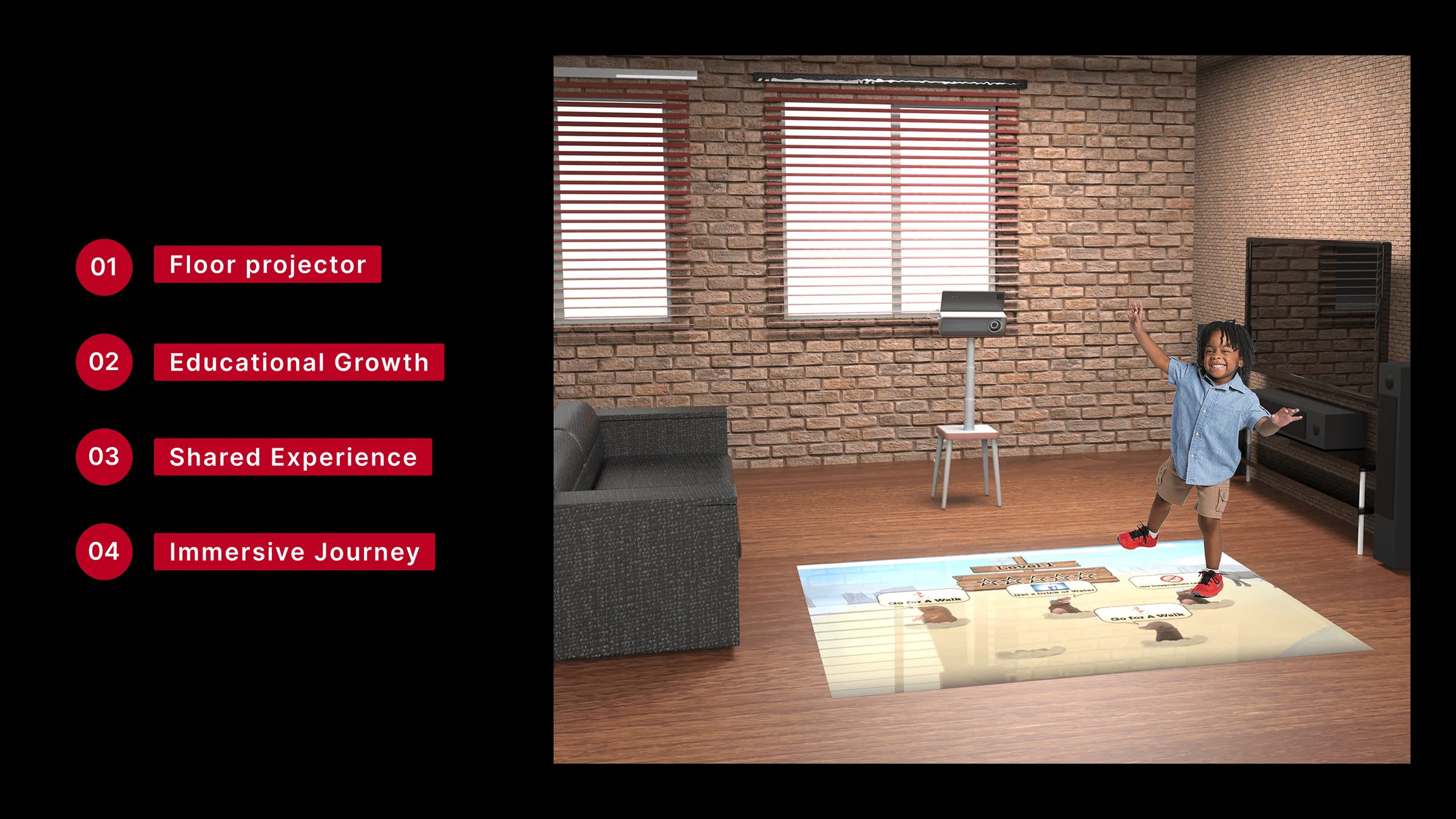
Crafted for children (K-5) and their guardians, Canon LUMI is a comprehensive EdTech system that projects interactive learning content onto any floor. The system includes an array of educational themes ranging from SEL to math, science, language, arts, etc.
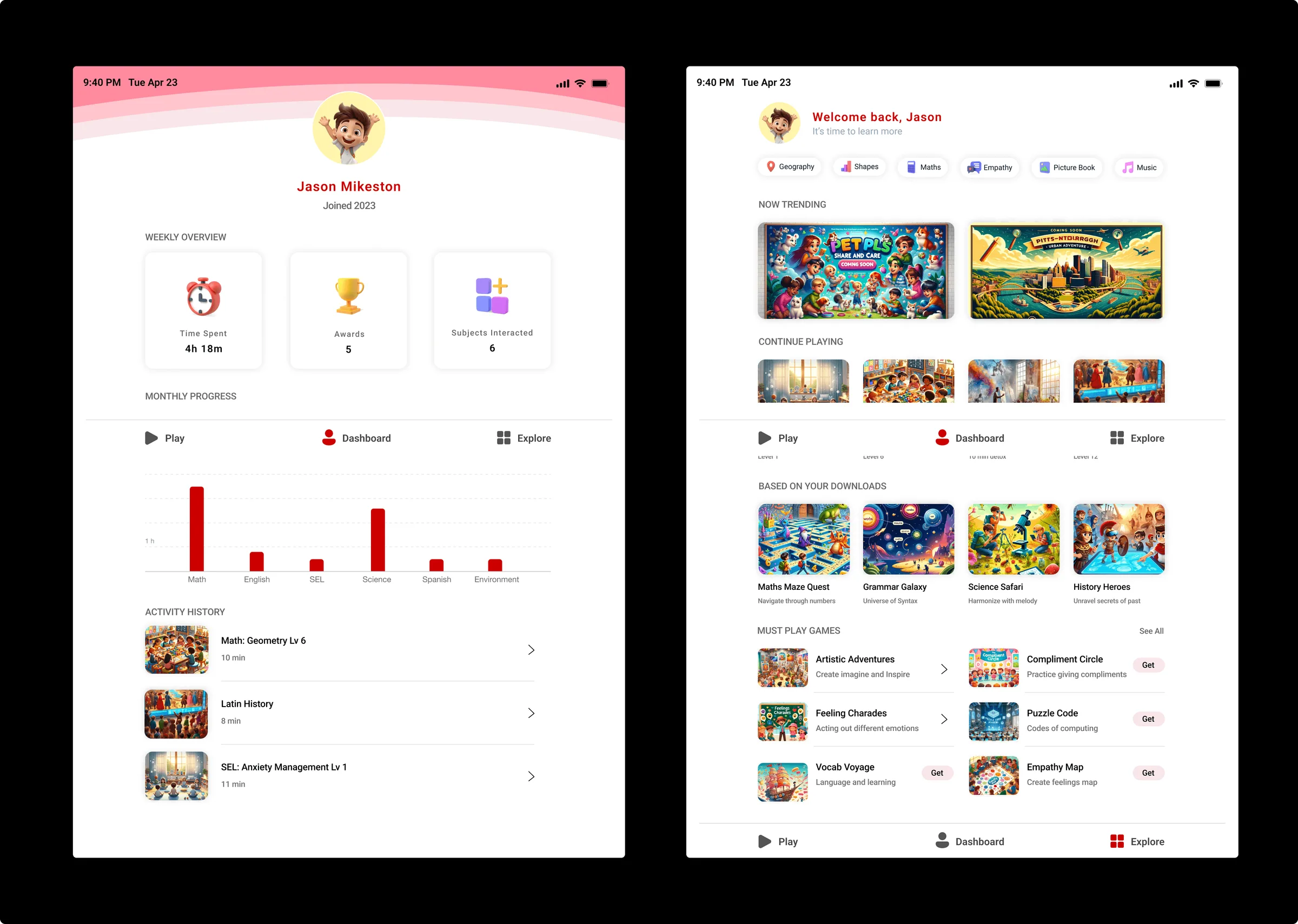
Canon LUMI Application Experience
The interactive game for children incorporates gamification into the learning environment to increase their interest in learning. The interface, as depicted in the accompanying wireframe, is user-friendly and intuitive, enabling parents or children to easily navigate and scroll through the available EdTech games.
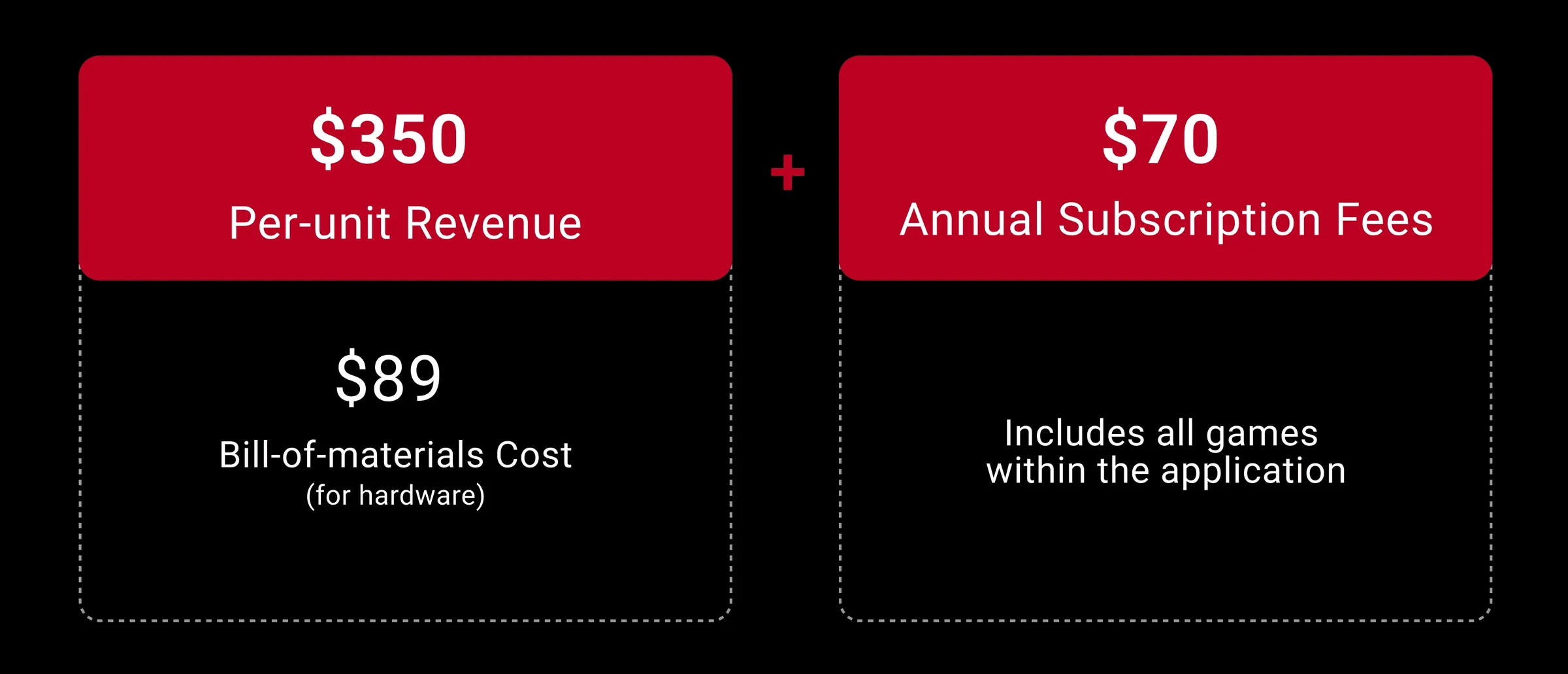
Revenue Model
In developing our interactive projector and subscription service, we have adhered to the industry-standard pricing strategy where the sales price to cost ratio is typically maintained at 3:1.
Future RoadMap
How are we cutting product development time?
Multiplayer Gaming
Promotes social interaction and cooperative learning when people come together and learn.
Versatile Projection
Flexibility in home setup, making it adaptable to different spaces and children's needs.
Research
How Did We Get Here?
- User Interviews
- Co-Design Sessions
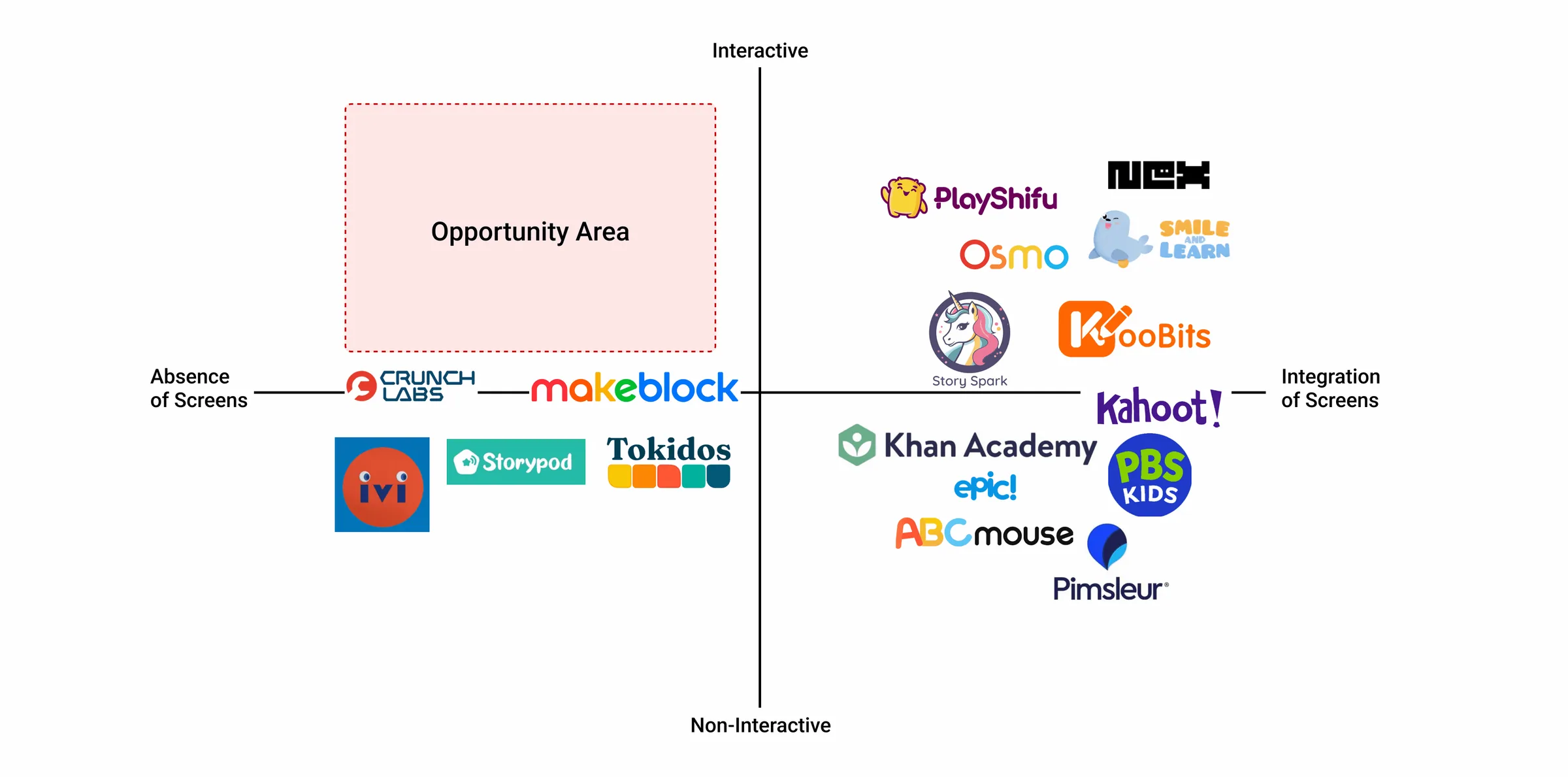
- Product Benchmarking
- Opportunity Analysis
There's an emerging demand for educational tools that manage to engage young learners by promoting active thought and exploration, while still embracing the physical aspects of learning that are intrinsic to early development.
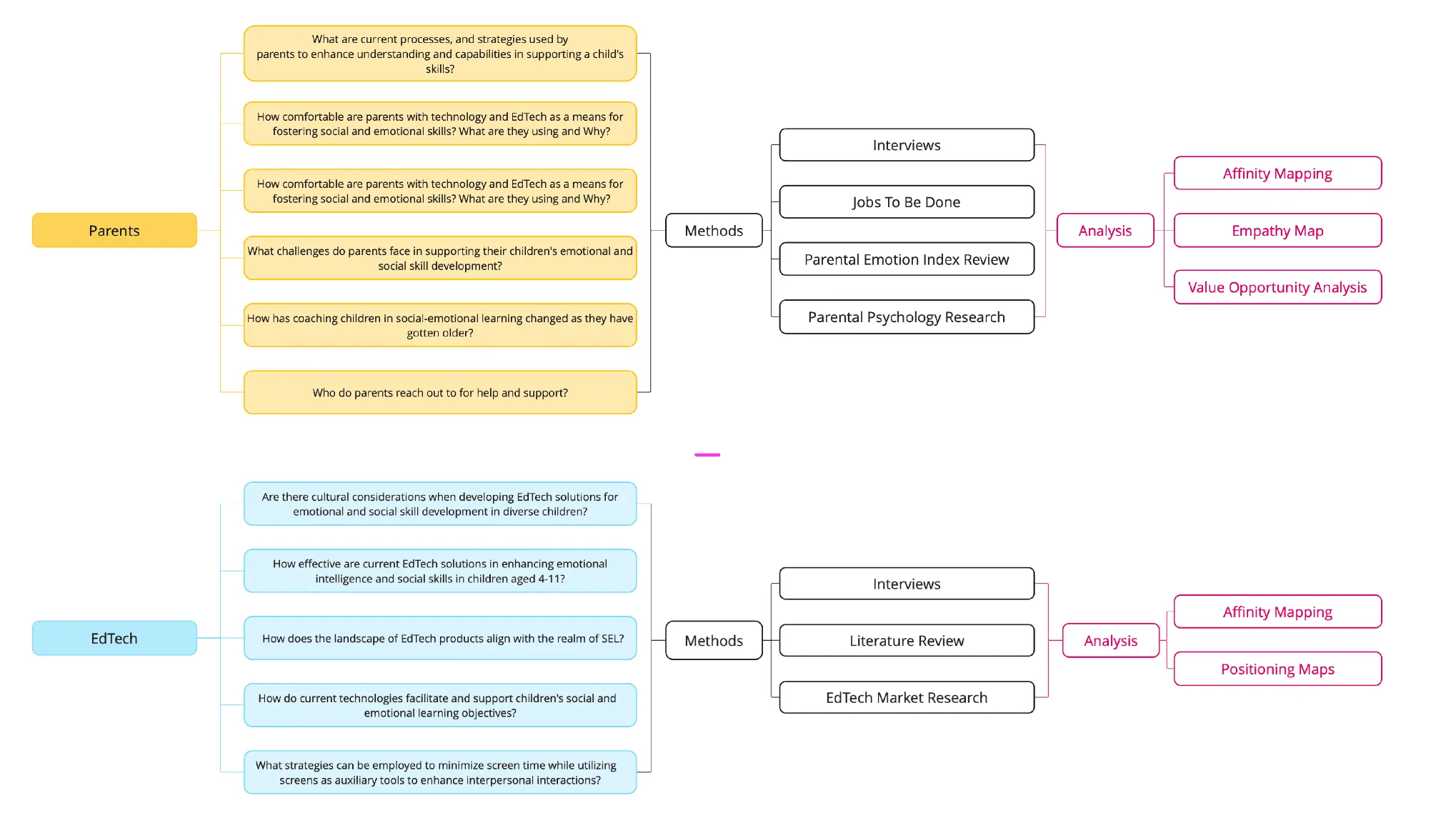
Our research was structured around three fundamental aspects:
Aspect 1
Understand parents' goals and challenges in fostering their children's emotional and social skills comprehensively.
Aspect 2
Gain insight into child psychology, specifically focusing on goals and challenges associated with nurturing children's emotional and social skills
Aspect 3
Understand parents' goals and challenges in fostering their children's emotional and social skills comprehensively.
We conducted a series of stakeholder interviews with key clients to gain an understanding of their challenges and objectives. This provided valuable insights into their pain points, expectations, and vision for the solution.
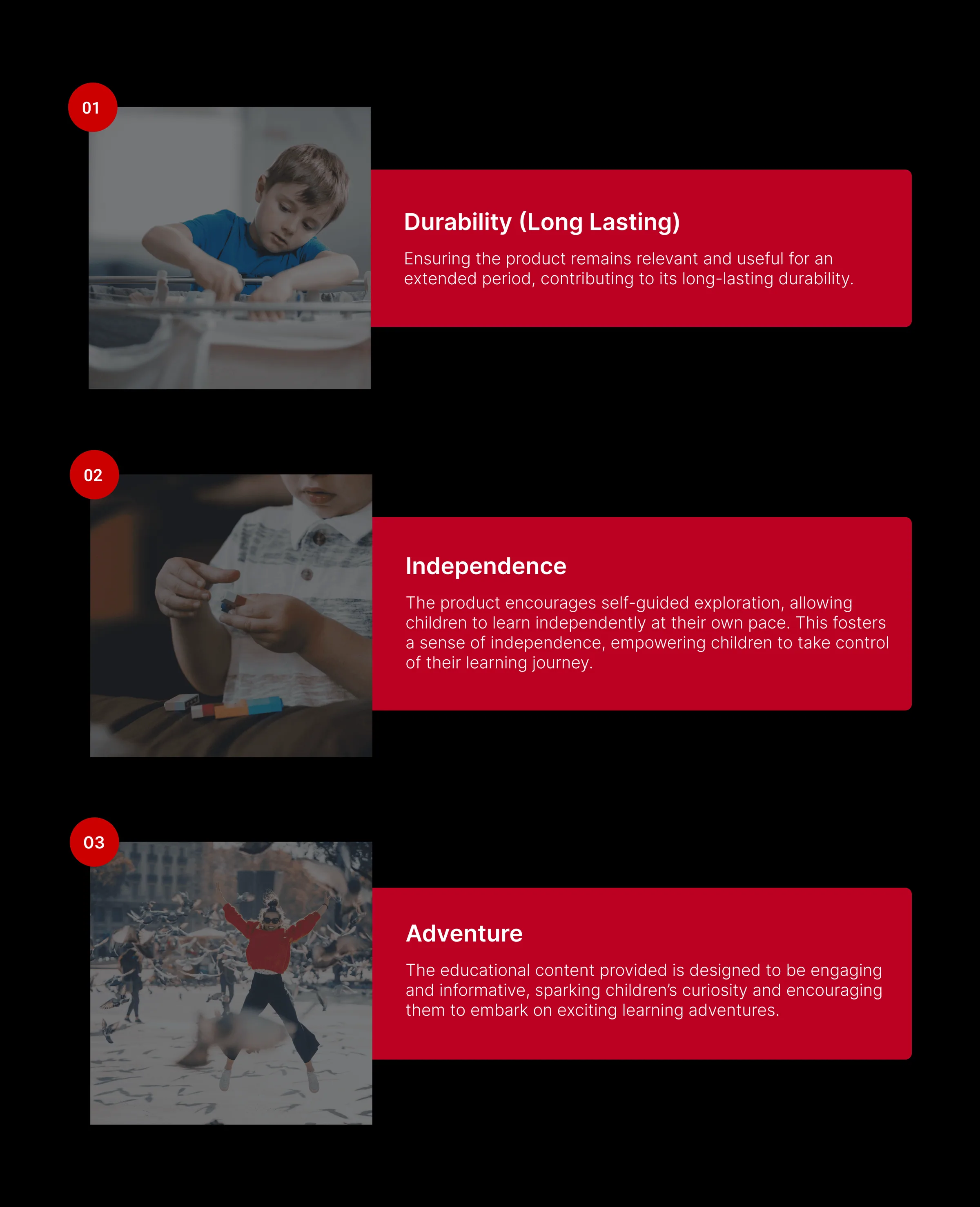
Early Product Criteria
By analyzing the current competitors in the SEL-integrated EdTech market as well as our defined values, our team identified key value gaps and subsequently derived early product criteria. These criteria underscore the need for a solution characterized by the following
Validation
Interview Session With Parents
- Voting
- Feedback Loops
- Product Validation
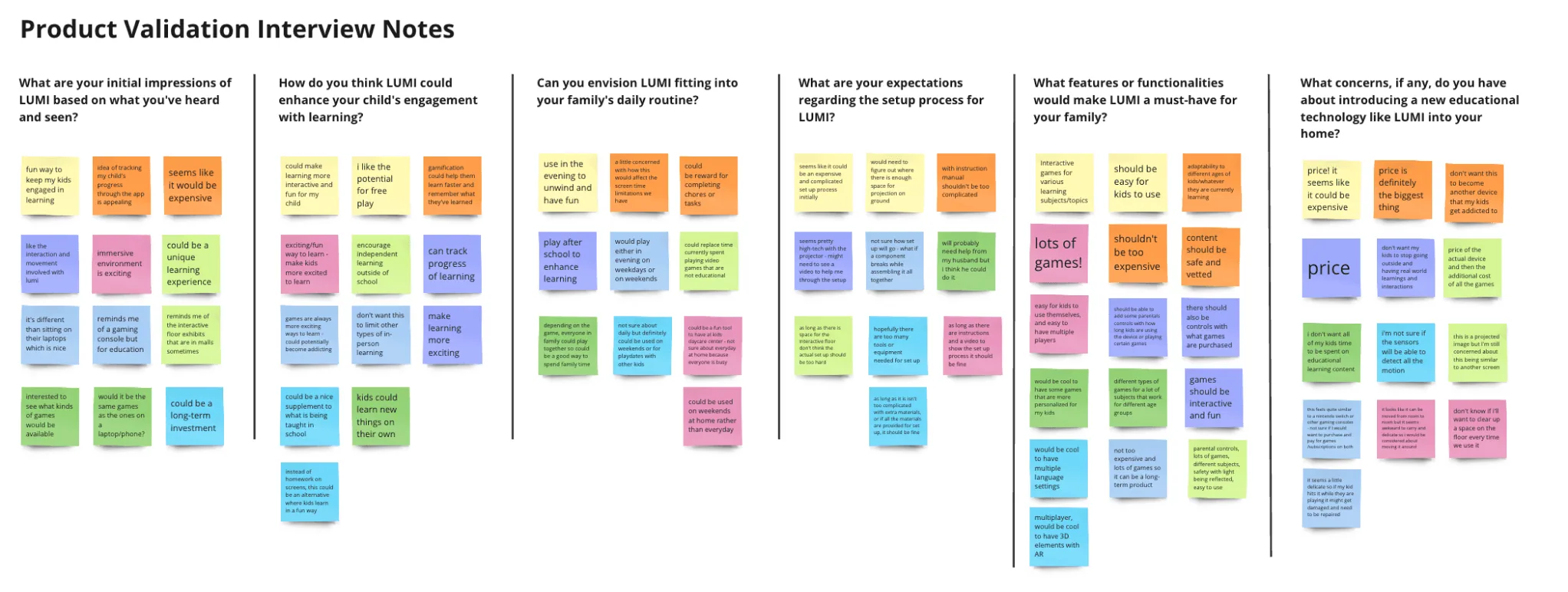
In order to get feedback about the Canon LUMI product, we conducted product validation interview sessions with parents. We interviewed 8 families to ask various questions about the product, such as their initial impressions, features and functionalities that they consider must-haves, their main concerns, amongst others.
Major Takeaways
01:
Parents appreciate LUMI's potential to make learning interactive, engaging, and adaptable to different ages and subjects, providing a fun and rewarding learning experience for their children.
02:
LUMI's multiplayer capabilities and potential for family involvement are seen as positive aspects, offering opportunities for collaborative learning and quality family time.
03:
While intrigued by the concept, some parents express concern about the initial cost and setup process of LUMI, especially regarding space requirements and potential technical complications.
04:
While some parents are cautious about the durability, and portability of LUMI, others see LUMI as a valuable long-term investment in their child's education.
This is just a part of the story…
Reach out for more on this project!